Learning at a Young Age
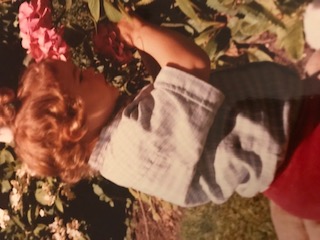
Children learn and develop more in the first three years of life than at any other time in their lives.
This section concerns little people from about six months to two years old
As mentioned, talking to a child is so important and is the foundation of all learning and will improve your child’s learning journey through life. Talk about all you see – walking, a journey on the bus, in the car, the shops, the nearby park, the toys, your cooking, the weather, the seasons, your memories.
Talk about feelings too – this should also help them in later life. Teach them about other people’s feelings too.
Help them to learn good behaviour and eventually about wrong or unhelpful actions. Help them to accept themselves; to be kind to themselves and others. At the same time, guard against indulging your child.
There are many activities that babies, toddlers – children – will enjoy and will be good for them from about six months and beyond.
Listening to sounds. Being aware of sounds in the environment.
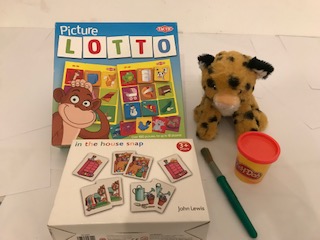
Looking at picture books; you can also make your own scrapbook of pictures from magazines or your own photos. There are some very simple books which show photos of everyday objects which babies and toddlers tend to love.
Playing – with their toys of course and imaginary games – so vital
- Very simple puzzles
- Bricks
- Outdoor play
- Wax crayons from about the age of one
- Threading big beads and laces
- Modelling with play-doh
- Dressing up
- Painting
- Today there are many art and craft packs that you can buy in shops and on-line. Poundland used to do some very nice thin cardboard people outlines for colouring
- Making sounds, making ‘music’ with wooden spoons, shakers and rattlers
- Count steps to ten as you go up and down them, wherever you are
- Making little friends – they usual play alongside each other, rather than with each other at this stage
- Singing and listening to nursery rhymes and songs
- Games of imagination with dolls, cars and, later, making a den
- Tell traditional stories – from your family or from here. Some early stories are Goldilocks, or Goldi as I call her, Little Red Riding Hood and the Three Little Pigs. I always remember changing my grandchildren’s nappies at about age one and beginning to tell them the story of Goldi who went out one morning for a walk – saying it in that special telling-a-story voice – it certainly got their attention, and they stopped wriggling – for a while!
- Children often love to look at maps
- Continue talking, talking, talking. Children with a good vocabulary find reading easier as they will more readily recognise the words they are sounding out
- Learn to know the colours and the names of the different parts of the body
- Help your child to speak clearly; this, in turn, will help your child's reading and eventually their spelling.
- Children are often fascinated to know how things were in the past and about the world in general.
- Talk about the seasons, the days of the week and eventually the concept of a week. At about two, your child will enjoy a local singing or rhyme group. Then there are the wonderful Tumble Tot groups where there is climbing and singing simple songs.